Posts

Showing posts with the label introduction

Sources and interpretations of the culture of ancient Egypt

Image
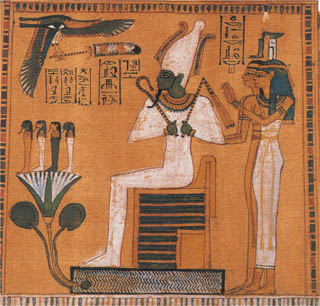
Egyptian culture and mythology stand as one of the most intricate and fascinating systems of belief. Unlike Greek, Norse, or Inca mythologies, which present a wealth of narratives unified by a clear internal logic and supported by extensive oral and written traditions bringing them closer to our understanding, Egyptian mythology—referred to as Kemet in ancient times—does not follow this pattern. In the following discussion, we will delve into the reasons behind this and attempt to unravel the complex mechanisms that sustained the religious coherence of a civilization that thrived for over two millennia. As we delve into Egyptian mythology, we encounter an array of deities that manifest in diverse forms. A single god may be depicted in vastly different manners, such as an animal or an animal-headed human, for instance. This deity may merge with others, spawning new divine entities and iconographies, and may assume varied roles. Similarly, creation myths vary based on their city of origi...
Contradictory myths. Coherence.

Image
One aspect that can be confusing when discussing Kemet is the apparent contradictions within certain myths or narratives. There are multiple creation stories, as well as a variety of gods who have different forms yet perform identical functions, assimilations of gods, and other elements that may seem overly complex to those unfamiliar with the culture. It's important to recognize that Kemet's culture spans a vast period of over 2,500 years. During this time, beliefs and cultural practices were subject to change and transformation. Therefore, it's not unexpected for certain deities to fade from prominence or for local gods to gain importance and become national figures depending on the circumstances. Regarding contradictory myths—the primary focus of this discussion—it should be noted that these contradictions were not only acknowledged throughout history but were also harmoniously accepted. As paradoxical as they may seem, they were considered consistent within the broader ...

Kemet chronology

Image
One of the most significant yet often overlooked aspects when examining the civilization of Kemet is its chronology. Establishing or understanding temporal frameworks regarding its evolution as a culture enables us to comprehend more profoundly the transformations, personalities, deities, and the overall culture. Image of the Description of L'Egypte of Napoleon's expedition To comprehend the extensive history of Kemet, which spans nearly three millennia, a clear chronology is essential. Without it, the myriad of kings, tombs, and temples becomes an indecipherable tangle, detached from their rightful place in history. Thus, our focus will be on delineating this chronology. While this entry does not aim for an exhaustive analysis of Kemet's historical periods or a deep dive into the nuances of each era, it serves as an introductory guide for those new to Ancient Egypt. Generally, Egyptologists and scholars have categorized Kemet's history into three primary periods—Old Ki...

The spatio-temporal problem in ancient Egypt

Image
Before we delve into the subject and explore the myths, gods, and culture of ancient Egypt, it's important to take a moment to examine an element that significantly influences our later perception of these myths, gods, and culture. Specifically, I am referring to the element of space-time. Ancient Egypt was a civilization that endured for nearly 3,000 years, maintaining a consistent appearance in its primary characteristics. However, it is crucial not to overlook the significance of such an extensive period concerning various aspects of its culture. Within the same temporal framework, we can discern distinct creation myths that coexisted. It is evident that gods with similar roles were depicted differently across different regions. This phenomenon can be attributed to the fact that what constitutes a myth, or a collection of myths or deities, is not static but dynamic, with a defined structure and apparent linearity that may or may not coincide temporally, with disparit...

Transcription and transliteration of the language of ancient Egypt

Image
One common misconception about ancient Egypt is the improper handling of foreign names, either through incorrect translation or misrepresentation in another language. Transliteration should be clearly defined first: it is the method of converting the symbols of one writing system into another, enabling readers to reconstruct the original spelling of a word, even if they are unfamiliar with the original language. Conversely, transcription is an attempt to approximate the original sounds in the adapted word, but not necessarily its spelling. Transcription doesn't need to replicate the original word's spelling accurately. For clarity, let's consider some examples. Romaji, which employs the Latin alphabet to represent Japanese, is a form of transliteration. In our case, hieroglyph transliteration allows for the conversion of texts using familiar letters without losing their inherent meaning. However, our focus will be on transcription, where most significant errors occur. Tr...

Introduction to The last stage

Image
Although it may seem unusual to maintain a blog in English on my site, "The Last Stage," I find it necessary for several reasons. Firstly, it broadens the audience that can access the posts. Additionally, many have discovered the blog since I began writing about Ancient Egypt years ago, and with the growth of social media, new readers may find it now. Moreover, the purpose of this blog has evolved, rendering previous content outdated. To effectively disseminate the history of ancient Egypt and ensure that it is engaging for both beginners and those with prior knowledge, the articles must be meticulously crafted. The bibliography should be comprehensive, utilizing a variety of sources. It is crucial that each article undergoes thorough scrutiny to ensure that the information presented is solid, reflecting our understanding of historical periods that are sometimes theoretical. These posts, which are translations from the original Spanish blog, will feature several sec...